
Epigenetics vs Genetics: What's the Difference and Why It Matters for Your Health
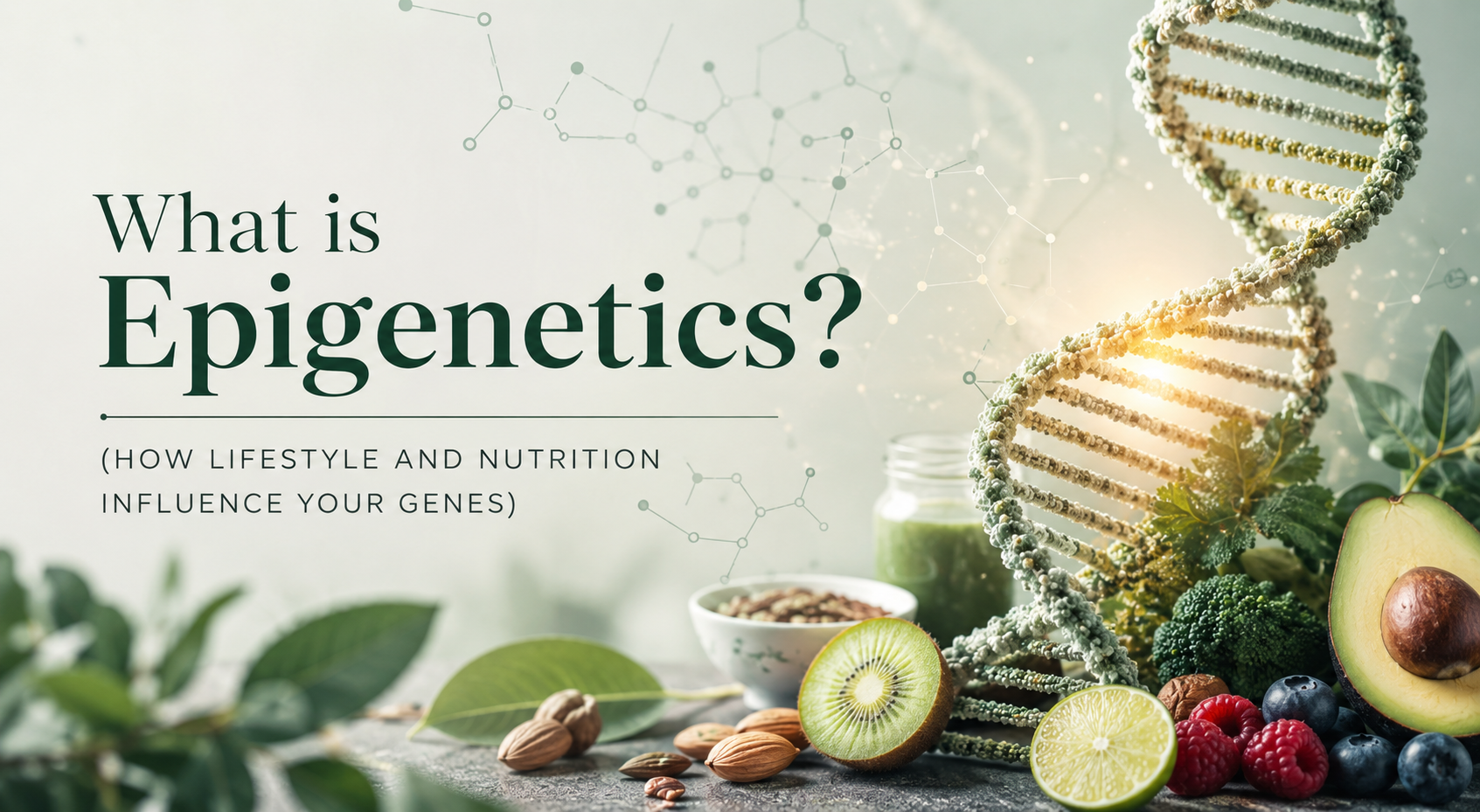
Understanding epigenetics vs genetics is essential because it helps explain why two people with similar genetic backgrounds can experience very different health outcomes..
While your genes provide the blueprint for your body, they do not determine every outcome. The way those genes are expressed can change throughout your life based on factors such as nutrition, physical activity, sleep, stress, and environmental exposures.
This is where the difference between genetics and epigenetics becomes important.
Your DNA may load the gun, but your lifestyle often pulls the trigger.
Epigenetics vs Genetics: Quick Answer
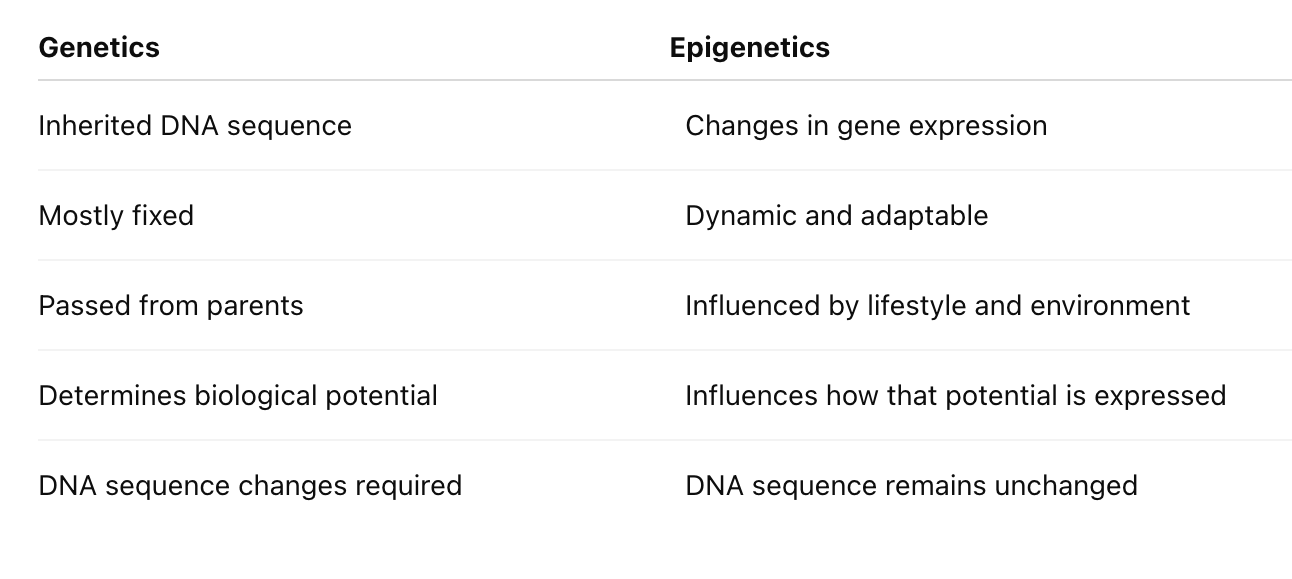
Genetics refers to the DNA you inherit from your parents. Epigenetics refers to chemical changes that influence how those genes are expressed without changing the DNA sequence itself. While genetics provides the blueprint, epigenetics helps determine how that blueprint is used throughout your life.
━━━━━━━━━━━━━━━━━━━━
Genetics vs Epigenetics: Side-by-Side Comparison
The Blueprint vs The Dimmer Switch
One of the easiest ways to understand the difference is through a simple analogy.
🧬 Genetics = The Blueprint
Your DNA contains the instructions for building and maintaining your body.
These instructions are inherited and remain relatively stable throughout your life.
Think of genetics as the architectural blueprint for a house.
The blueprint exists from the beginning.
Changing it would require rewriting the original plans.
Examples include:
Eye color
Blood type
Certain inherited conditions
Genetic mutations
🎛️ Epigenetics = The Dimmer Switch
Epigenetics determines how strongly certain instructions are followed.
Instead of changing the blueprint itself, epigenetic mechanisms influence how the blueprint is read.
Think of it as a dimmer switch controlling the brightness of a light.
The wiring stays the same.
The output changes.
Examples include:
DNA methylation
Histone modification
Changes in gene activity due to stress
Changes in gene activity due to nutrition
Genetics provides the notes. Epigenetics influences how the music is played.
━━━━━━━━━━━━━━━━━━━━
Why Do Different Cells Have the Same DNA but Different Functions?
A fascinating fact about the human body is that nearly every cell contains the same DNA. Yet brain cells behave differently than liver cells, and liver cells behave differently than skin cells.
Why? Because different genes are turned on and off in each cell type. Epigenetic mechanisms help determine which genes remain active and which stay silent. Without epigenetics, every cell would attempt to perform the same function.
Can Lifestyle Really Influence Gene Expression?
The answer is yes. Research shows that environmental and lifestyle factors can influence epigenetic patterns throughout life. Some of the most studied factors include:
🥗 Nutrition: Certain nutrients play important roles in methylation and other epigenetic processes. Read How Food Changes Gene Expression to learn more
🏃 Physical Activity: Exercise has been associated with beneficial changes in gene expression related to metabolism and inflammation.
😴 Sleep: Poor sleep may influence biological pathways involved in immune function and metabolic health.
😟 Chronic Stress: Chronic stress can affect how certain genes related to inflammation and resilience are expressed. Explore the science in How Stress Affects Your Genes.
🚭 Environmental Exposures: Smoking, pollution, toxins, and other environmental factors may contribute to unfavorable epigenetic changes. Your genes provide possibilities. Your daily habits influence which possibilities become reality.
Lifestyle factors such as diet, exercise, sleep, stress, and environmental exposures can influence gene expression through epigenetic mechanisms without changing the underlying DNA sequence.
━━━━━━━━━━━━━━━━━━━━
Does Epigenetics Mean You Can Completely Override Your Genes?
No.
This is one of the most common misunderstandings, epigenetics does not mean genetics are irrelevant, your genetic blueprint still matters. However, having a genetic predisposition does not always guarantee a specific outcome. In many cases, health results emerge from the interaction between genetics and environment.
The goal is not to ignore genetics. The goal is to understand how lifestyle may influence the way genes are expressed over time.

Why This Matters for Preventive Health
The traditional view of health focused heavily on inherited risk. The emerging view recognizes that lifestyle choices can influence biological pathways long before symptoms appear.
This shift helps explain why prevention is so powerful.
Rather than waiting for disease to develop, individuals can focus on the factors that support healthier gene expression patterns.
This includes:
✅ Nutrition
✅ Physical activity
✅ Stress management
✅ Sleep quality
✅ Environmental awareness
━━━━━━━━━━━━━━━━━━━━
The Bottom Line
Your genetics provide the foundation.
Your epigenetics helps determine how that foundation is used.
While you cannot choose the genes you inherit, many everyday habits influence how those genes are expressed throughout your life.
Understanding the relationship between genetics and epigenetics offers a more empowering view of health—one that recognizes both biology and lifestyle as important pieces of the puzzle.
FAQ
What is the difference between genetics and epigenetics?
Genetics refers to the DNA sequence you inherit from your parents. Epigenetics refers to changes that affect how genes are expressed without altering the DNA itself.
Can lifestyle influence gene expression?
Research suggests that nutrition, exercise, sleep, stress, and environmental exposures may influence gene expression through epigenetic mechanisms. Learn more in our guide on How Lifestyle Changes Gene Expression.
Does epigenetics change your DNA?
No. Epigenetics affects how genes are activated or silenced without changing the underlying DNA sequence.
Can epigenetic changes be reversed?
Some epigenetic changes appear to be dynamic and may respond to lifestyle and environmental factors, though research is still evolving.
Continue Learning
👉 What Is Epigenetics?
Discover how epigenetic changes influence gene expression and why they are central to modern preventive health.
👉 What Is Metabolic Health?
Learn why blood sugar regulation, energy production, and metabolic flexibility are essential for long-term wellness.
👉 How Stress Affects Your Genes
Explore the connection between chronic stress, inflammation, and gene expression.
👉 Matcha & Weight Loss
Understand how nutrition choices may influence metabolism, energy, and overall health.
