
How Lifestyle Changes Gene Expression
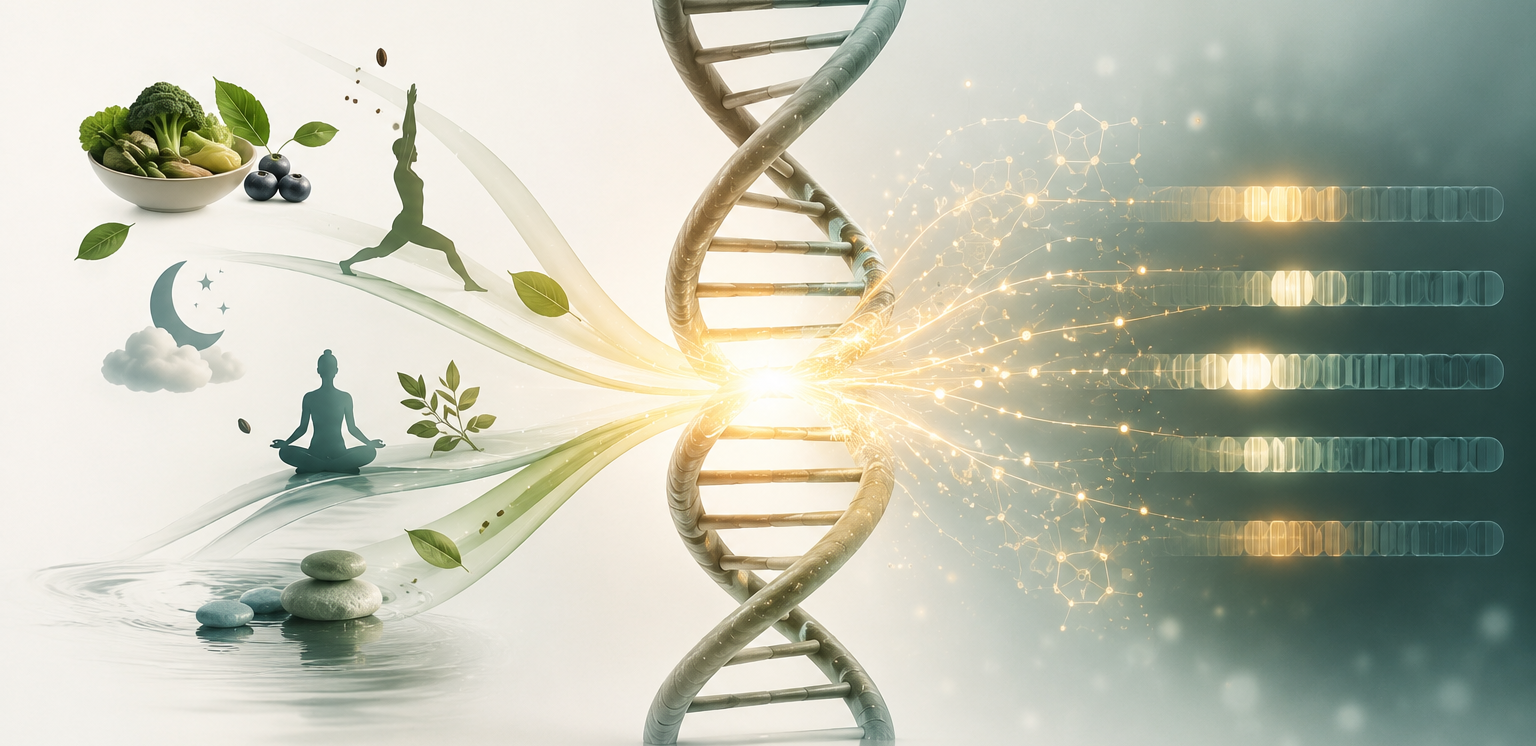
As a dietitian, I adopted a structured knowledge system built at the intersection of epigenetics, metabolic health, and personalized nutrition. Its foundation is simple: your biology is not static. It responds.
For decades, health was explained almost entirely through genetics. Today, we understand a more dynamic layer of biology—epigenetics—where lifestyle and environment influence how genes are expressed. This does not replace genetics. It refines it.
Your DNA remains stable. But the way it is read, activated, and regulated can shift throughout life.
“Genes are not fixed instructions being passively executed. They are actively regulated systems responding to internal and external signals.”
━━━━━━━━━━━━━━━━━━━━
What Does It Mean to Change Gene Expression?

Gene expression refers to how active a gene is inside your cells. Some genes are highly active. Others are silent. Many fluctuate depending on biological needs. Lifestyle factors do not rewrite DNA itself, but they can influence:
Which genes are turned on or off
How strongly genes are expressed
How cells respond to stress and energy demands
This is the central mechanism of epigenetics.
Lifestyle can influence gene expression through epigenetic mechanisms such as DNA methylation and histone modification, without changing the underlying genetic code.
━━━━━━━━━━━━━━━━━━━━
The Main Lifestyle Factors That Influence Gene Expression
Modern research in epigenetics consistently highlights a few key regulators of gene activity:

🥗 Nutrition: Food provides biochemical signals that affect metabolic pathways and cellular regulation. Nutrient availability can influence how genes related to inflammation, detoxification, and energy production are expressed.
😴 Sleep: Sleep regulates repair systems in the body. Poor sleep has been associated with altered gene expression related to immunity and metabolic balance.
🏃 Movement: Physical activity influences gene expression linked to insulin sensitivity, mitochondrial function, and inflammation control.
😟 Stress: Chronic stress activates hormonal pathways that can shift gene expression patterns over time, particularly those related to inflammation and resilience.
🌍 Environment: Exposure to toxins, pollution, and external chemicals can also influence epigenetic regulation.
“The environment does not change your DNA sequence—but it can influence how your DNA is interpreted by the body.”
━━━━━━━━━━━━━━━━━━━━
Why This Matters for Health Outcomes
This is where EPIGENETICS becomes clinically relevant. Two people can share similar genetic risk profiles but experience very different health outcomes. The difference is often not the genes themselves, but how those genes are expressed over time.
This helps explain:
Why lifestyle interventions can be powerful
Why disease risk is not purely deterministic
Why early prevention has long-term biological impact
Epigenetics shifts health from fixed prediction to dynamic regulation.
Epigenetics shows that while genetics provides the blueprint of the body, lifestyle and environment can influence how that blueprint is read and expressed over time.
🍍Dietisha Perspective: A Systems-Based View of Biology
At Dietisha, health is not viewed as isolated behaviors. It is understood as a connected system where:
Epigenetics → explains gene regulation
Metabolic health → reflects energy and biological efficiency
Personalized nutrition → adapts inputs to individual biology
This is why Dietisha is structured as a knowledge system rather than a single health concept. It connects mechanism (genes), function (metabolism), and application (nutrition strategy).
The Bottom Line
Your DNA does not change with lifestyle
Gene expression can change throughout life
Epigenetics connects environment with biology
Nutrition, sleep, stress, and movement are key regulators
Health outcomes are influenced by gene-environment interaction
━━━━━━━━━━━━━━━━━━━━
Continue Learning
To understand this topic more deeply, explore the foundational pillars of Dietisha:
👉What Is Metabolic Health?
Understand how energy regulation, insulin sensitivity, and metabolic function connect to long-term health outcomes.
👉 Matcha & Weight Loss
Explore how nutritional compounds may influence metabolism, energy balance, and daily performance.
👉 How Stress Affects Your Genes
Learn how chronic stress can influence biological pathways and gene expression over time.
👉 What Is Epigenetics?
Return to the core framework of how gene regulation works in modern biology.
👉 Visit the Dietisha homepage to explore the full system of epigenetics, metabolic health, and personalized nutrition programs.
Final Insight
Gene expression is not fixed. It is responsive, dynamic, and influenced by the environment you live in every day.
Understanding this relationship is the foundation of preventive health—and the core philosophy behind Dietisha.
