
How Stress Affects Your Genes
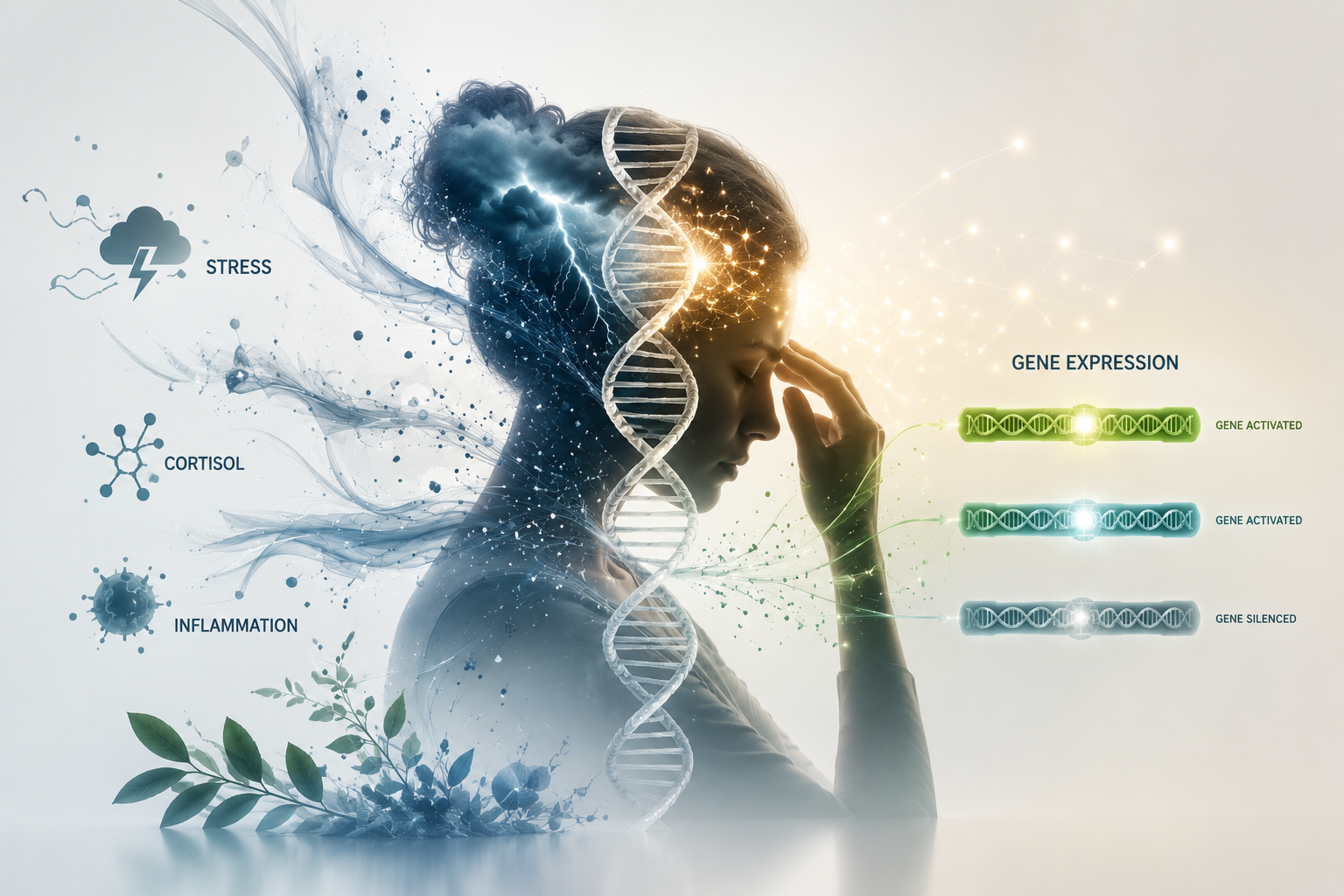
Stress is often viewed as a mental or emotional experience, but from a biological perspective, stress is much more than a feeling. Every stressful event triggers a cascade of chemical signals throughout the body. These signals influence hormones, metabolism, immune function, and even the way certain genes are expressed.
Modern epigenetics research suggests that chronic stress may leave biological marks that affect how the body functions over time. Understanding this connection helps explain why managing stress is not simply about feeling better—it is also about supporting long-term health.
Stress does not change your DNA sequence, but it can influence how your genes are expressed.
━━━━━━━━━━━━━━━━━━━━
What Happens Inside Your Body During Stress?
Stress activates a system known as the hypothalamic-pituitary-adrenal (HPA) axis. This system helps the body respond to perceived threats by releasing stress hormones, including cortisol and adrenaline. In the short term, this response can be beneficial, It helps increase alertness, mobilize energy, and prepare the body for action. Problems arise when stress becomes chronic, instead of activating occasionally, the stress response remains switched on for extended periods. Over time, this can affect multiple biological systems simultaneously.
Common Effects of Chronic Stress
Elevated cortisol levels
Increased inflammation
Changes in blood sugar regulation
Disrupted sleep patterns
Altered immune function
Reduced metabolic flexibilit

Chronic stress affects the body by activating hormonal pathways that influence inflammation, metabolism, immune function, and gene expression. These effects may contribute to long-term health changes.
The Connection Between Stress and Gene Expression
One of the most fascinating discoveries in epigenetics is that environmental experiences can influence how genes are regulated. Stress is one of the most studied examples.
Researchers have observed that chronic stress may affect epigenetic mechanisms such as DNA methylation and histone modification. These mechanisms help determine which genes are more active and which become less active.
The DNA itself remains unchanged. What changes is how the body reads and uses that genetic information. This helps explain why prolonged stress can affect biological systems far beyond the brain.
Your genes provide the blueprint, but stress can influence how that blueprint is interpreted.
━━━━━━━━━━━━━━━━━━━━
Why Stress Matters for Metabolic Health
Stress and metabolism are deeply connected. When cortisol levels remain elevated for extended periods, the body may prioritize immediate survival rather than long-term maintenance.
This can contribute to:
Increased cravings for high-sugar foods
Changes in appetite regulation
Reduced insulin sensitivity
Difficulty maintaining stable energy levels
Increased abdominal fat storage
These changes help explain why stress often affects both physical and mental health simultaneously.
This relationship is one reason why understanding What Is Metabolic Health? is essential when looking at long-term wellness.

Can Stress-Related Changes Be Reversed?
In many cases, yes. One of the most encouraging findings in epigenetics is that many stress-related changes appear to be dynamic rather than permanent. While chronic stress can influence gene expression, inflammation, metabolic health, and hormone regulation, research suggests that the body also has a remarkable ability to adapt and recover when stress levels are reduced. This does not mean that every stress-related condition can be completely reversed. The longer stress remains unmanaged, the greater its potential impact on health.
However, addressing chronic stress early may help support healthier patterns of gene expression and improve the body's ability to repair and regulate itself. Studies have shown that factors such as quality sleep, regular physical activity, balanced nutrition, social connection, and effective stress management can positively influence biological pathways affected by chronic stress.
In some cases, improvements in these areas have been associated with better metabolic health, lower inflammation, improved resilience, and enhanced recovery from stress-related conditions. The key message is that your biology is not fixed. While you cannot erase every stressful experience, your body often has a greater capacity for recovery than many people realize.
Epigenetic changes associated with stress may be influenced by lifestyle factors such as sleep, exercise, nutrition, and stress management because gene expression is dynamic and responsive to the environment.
A Systems View of Health
At Dietisha, stress is not viewed as an isolated problem. It is part of a larger biological system that includes gene expression, metabolic health, nutrition, sleep, and lifestyle habits. Understanding these connections helps move health conversations beyond symptoms and toward prevention.
When viewed through the lens of epigenetics, stress becomes more than an emotional experience—it becomes a biological signal that influences how the body functions over time.
The goal is not to eliminate every source of stress. The goal is to create conditions that help the body respond and recover effectively.
━━━━━━━━━━━━━━━━━━━━
Key Takeaways
Stress affects more than emotions; it influences biological processes throughout the body.
Chronic stress can alter gene expression through epigenetic mechanisms.
Elevated cortisol may affect metabolism, inflammation, and immune function.
Stress and metabolic health are closely connected.
Lifestyle factors may help support healthier patterns of gene expression over time.
━━━━━━━━━━━━━━━━━━━━
Continue Learning
Related Articles
Learn how epigenetic mechanisms influence gene expression and why they are central to modern preventive health.
👉 How Lifestyle Changes Gene Expression
Discover how nutrition, sleep, movement, and environmental factors influence gene activity throughout life.
Understand the role of metabolism, insulin sensitivity, and energy regulation in long-term wellness.
Explore how nutritional choices may influence metabolism and overall health.
Ready to Explore Your Biology More Deeply?
Dietisha combines epigenetics, metabolic health, and personalized nutrition to help individuals better understand the factors influencing their long-term health.
Explore more on my website to learn how small lifestyle changes may support lasting wellness.
