
How Food Changes Gene Expression (Epigenetics Explained Simply)
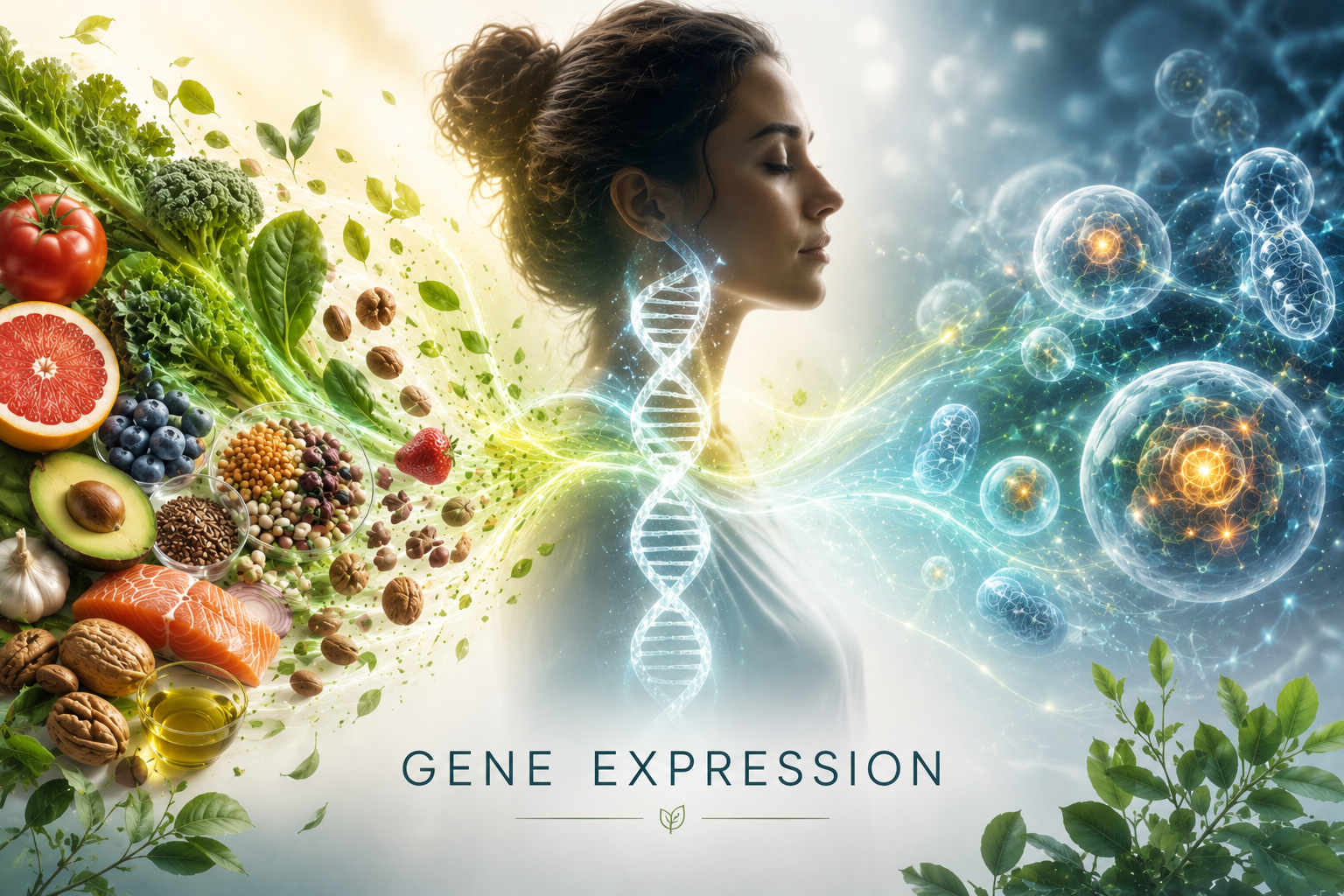
Every day, your body receives thousands of signals from the environment.
Some come from stress.
Some come from sleep.
Some come from physical activity.
And some come from something you do multiple times a day: eating.
For decades, nutrition was viewed primarily as a source of calories and nutrients. Today, researchers understand that food also acts as biological information. Certain nutrients can influence how genes are expressed, how cells communicate, and how biological systems function over time. This emerging field sits at the intersection of nutrition and epigenetics.
Food is more than fuel. It is information that communicates with your biology.
Can Food Really Influence Gene Expression?
The short answer is YES.
Food cannot change the DNA sequence you inherited from your parents. However, it can influence how that DNA is read and expressed. This process occurs through epigenetic mechanisms that help regulate which genes are active, inactive, or more strongly expressed, in other words, your genes provide the blueprint, but nutrition helps shape how that blueprint is used.

Food can influence gene expression through epigenetic mechanisms without changing the underlying DNA sequence. Nutrients and dietary patterns act as biological signals that help regulate how genes are expressed.
How Does This Happen?
Cells continuously respond to information from their environment and nutrition is one of the most powerful environmental inputs.
Certain nutrients participate in processes that help regulate gene activity, including:
DNA methylation
Histone modification
Cellular signaling pathways
Inflammation regulation
Energy metabolism
These mechanisms help determine which genes become more active and which become less active. The DNA itself remains unchanged, what changes is how the body uses the information stored within it.
Your genes may provide the instructions, but your environment helps determine which instructions are followed.
Foods Don't Control Single Genes—They Influence Systems
One common misconception is that a specific food turns a specific gene on or off, but Biology is much more complex. Foods influence networks of genes and biological pathways simultaneously. This is why overall dietary patterns often matter more than individual foods.
For example:
Diets rich in fruits and vegetables provide compounds that support antioxidant defenses.
Fiber-rich foods help support metabolic and gut health.
Omega-3 fatty acids may influence inflammatory pathways.
Highly processed dietary patterns may contribute to chronic inflammation.
Rather than acting like individual switches, foods influence entire biological systems.
Why Nutrition Matters for Long-Term Health
Epigenetics helps explain why nutrition has effects that extend beyond immediate energy needs. The foods we eat contribute to biological environments that support or challenge healthy function.
Over time, these signals may influence:
Inflammation
Metabolic health
Insulin sensitivity
Cellular repair
Healthy aging
Disease risk
This does not mean that one meal determines your future health. What matters most is the pattern created by daily choices over months and years.
Nutrition influences biological pathways related to inflammation, metabolism, cellular repair, and healthy aging. These effects may occur partly through epigenetic mechanisms that regulate gene expression.
Is There an "Epigenetic Diet"?
Not exactly. There is currently no single diet that works for everyone because individuals respond differently to foods, nutrients, stress, and environmental factors. This is one of the reasons why personalized nutrition has become such an important area of modern health science.
At Dietisha, we use epigenetic analysis to better understand how lifestyle and environmental factors may be influencing biological function. Through advanced assessments, multiple epigenetic and wellness-related indicators are analyzed to help create a more personalized health strategy. Rather than following a generic diet plan, the goal is to identify areas where the body may benefit from targeted nutritional and lifestyle support.
This personalized approach recognizes that two people eating the same foods may experience very different biological responses.
The future of nutrition is not finding the perfect diet. It is understanding what your body really needs.
Why my Program Last 90 Days?
Gene expression is dynamic, but biological systems require time to respond to consistent changes. During this period, nutrition, lifestyle, stress management, and recovery strategies are implemented consistently to help support healthier biological function and cellular renewal processes.
The objective is not a quick fix. It is creating an environment that supports long-term health, metabolic balance, and improved biological resilience over time. Small daily actions repeated consistently often have a greater impact than dramatic short-term interventions.
This philosophy is at the core of the Dietisha 90-Day Personalized Nutrition Program.
My Perspective
Nutrition is viewed as one of the most powerful lifestyle factors influencing biology. Food does not work in isolation.
Its effects interact with sleep, stress, physical activity, metabolic health, and genetic predispositions. This systems-based perspective is why personalized nutrition is so important.Two people can eat the same meal and experience different biological responses. Understanding these differences is one of the central goals of modern nutrition science.
━━━━━━━━━━━━━━━━━━━━
Key Takeaways
Food does more than provide energy.
Nutrition acts as biological information.
Food can influence gene expression through epigenetic mechanisms.
Dietary patterns matter more than individual foods.
Nutrition, stress, sleep, and physical activity work together to influence health outcomes.
Personalized nutrition recognizes that biological responses differ between individuals.
Continue Learning
Related Articles
Understand the science behind gene expression and environmental influences.
👉 How Lifestyle Changes Gene Expression
Learn how sleep, stress, movement, and environment affect your biology.
👉How Stress Affects Your Genes
Explore how chronic stress can influence gene expression and metabolic health.
Discover why metabolic flexibility and energy regulation matter for long-term wellness.
