
How Coca-Cola Branded Christmas: The Real Story Behind Santa's Makeover

Now that we are all having the Christmas spirits in our hearts, have you ever wondered who truly created Santa Claus?
Of course, Santa is historically linked to the North Pole (CANADA)—the ultimate home base! But did Coca-Cola invent the iconic image we all know and love?
It’s one of the most persistent myths in branding history! While the idea of a gift-giver existed for centuries, and other artists had used the red suit, Coca-Cola's legendary marketing campaign in the 1930s is what solidified our universal image of the jolly, rosy-cheeked, white-bearded man.
This wasn't just advertising; it was a strategic move that redefined Christmas branding and drove sales. Here's how they did it:
The Marketing Masterstroke (1931-1964)
In 1931, Coca-Cola commissioned illustrator Haddon Sundblom to create a wholesome, human-like Santa for their holiday ads. Their goal was simple: to make a cold, refreshing drink appealing even in the middle of winter, boosting sales during a traditionally slow season.
1. Standardization: Before this, Santa's appearance was wildly inconsistent. Sundblom’s artwork created a single, universally recognizable figure: a warm, happy, and pleasantly plump grandfather figure.
2. Branding & Color: Sundblom’s Santa almost exclusively wore a bright red and white suit, colors that perfectly matched the Coca-Cola logo and packaging, intertwining the brand identity with the holiday icon.
3. Emotional Connection: The ads showed Santa reading children's letters, delivering toys, and—crucially—pausing to enjoy an ice-cold Coca-Cola. This storytelling created a deeply emotional link between the brand and the feelings of joy, warmth, and nostalgia associated with Christmas.
More Sales, More Profit
By tying Santa to their product, Coca-Cola achieved its commercial goals: they successfully positioned a summer soft drink as a festive treat for the winter holidays, creating a global Christmas tradition along the way.
A Dietitian's Note: The Unique Danger of Liquid Sugar
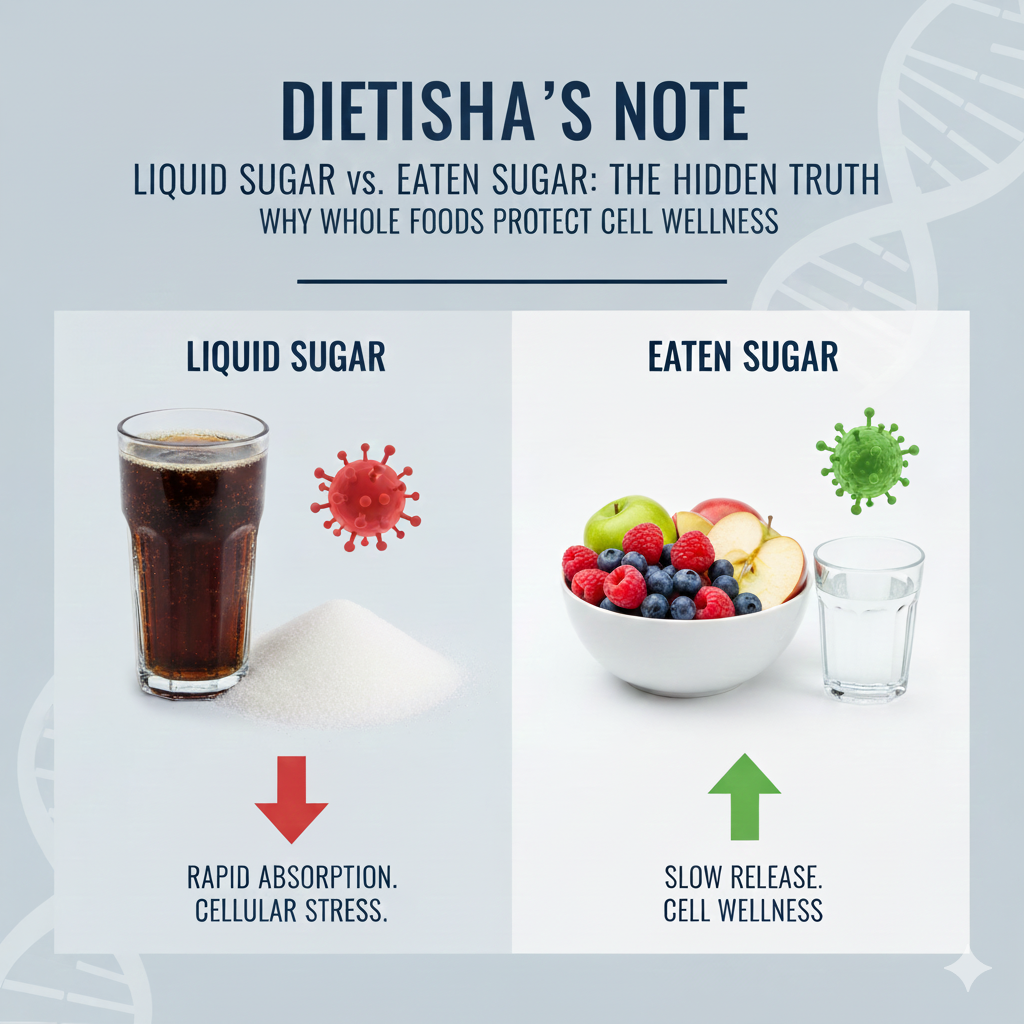
While the branding is brilliant, the ingredients warrant a closer look, especially concerning the health impact of sugary drinks.
The Problem of Calorie Compensation
From a nutritional standpoint, the sugar consumed in liquids, like soft drinks, can often be worse for the body than the sugar found in solid foods.
Important Distinction: Of course, linking the rise in soft drink consumption with the rise in obesity does not automatically prove that soda is the sole cause of weight gain. Diet is complex; soda drinkers might also be less active or consume more unhealthy solid foods.
However, scientific research suggests soda is unique in its contribution to weight gain due to a phenomenon called Calorie Compensation:
The Mattes Study: A study by Purdue University nutritionist Richard Mattes showed that participants given an extra 450 calories a day of solid food (jelly beans) did not gain weight, as they naturally compensated by eating less other food. Yet, when the study was repeated with an extra 450 calories of soda, participants failed to compensate, and their weight and Body Mass Index (BMI) increased.
The Hypothesis: Mattes hypothesized that "when drinking fluid calories," people simply do not register the extra energy and continue to eat more calories, failing to satisfy their appetite.
The HFCS and Insulin Connection
Some researchers, such as Harvard's George Bray, have hypothesized that soda's main sweetener—often High Fructose Corn Syrup (HFCS)—also contributes uniquely to weight gain. This is because fructose is predominantly broken down in the liver, often turning directly into fat.
We all agree that sugar, in any large quantity, disrupts the body's natural mechanisms, causing cells to become more resistant to the enzyme insulin. Over time, this resistance can lead to diabetes.
Before the 1990s, this disease was primarily known as "adult-onset diabetes" since it typically occurred later in life. By 1996, however, so many children had developed the disease due to widespread changes in diet that the name was officially changed to simply Type 2 Diabetes.
The Epigenetic Report: Sugar at the Cellular Level
Today, we can look far beyond simple calorie counting to understand the impact of diet. Epigenetics is the study of how your behaviors and environment (including diet) can cause changes that affect the way your genes work.
A consistently high sugar intake can alter the patterns of DNA methylation—the chemical "on/off switches" that control gene expression—which can impact genes related to metabolism and inflammation.
Your body keeps a record of your diet. Advanced epigenetic reporting—often done via specialized blood or saliva tests—can tell you if the markers associated with high-sugar diets are present at a cellular level, providing a personalized report on how your metabolic health and lifestyle choices are affecting your gene function.
