
Oat Milk and Weight Loss: Healthy or Hidden Sugar Trap?
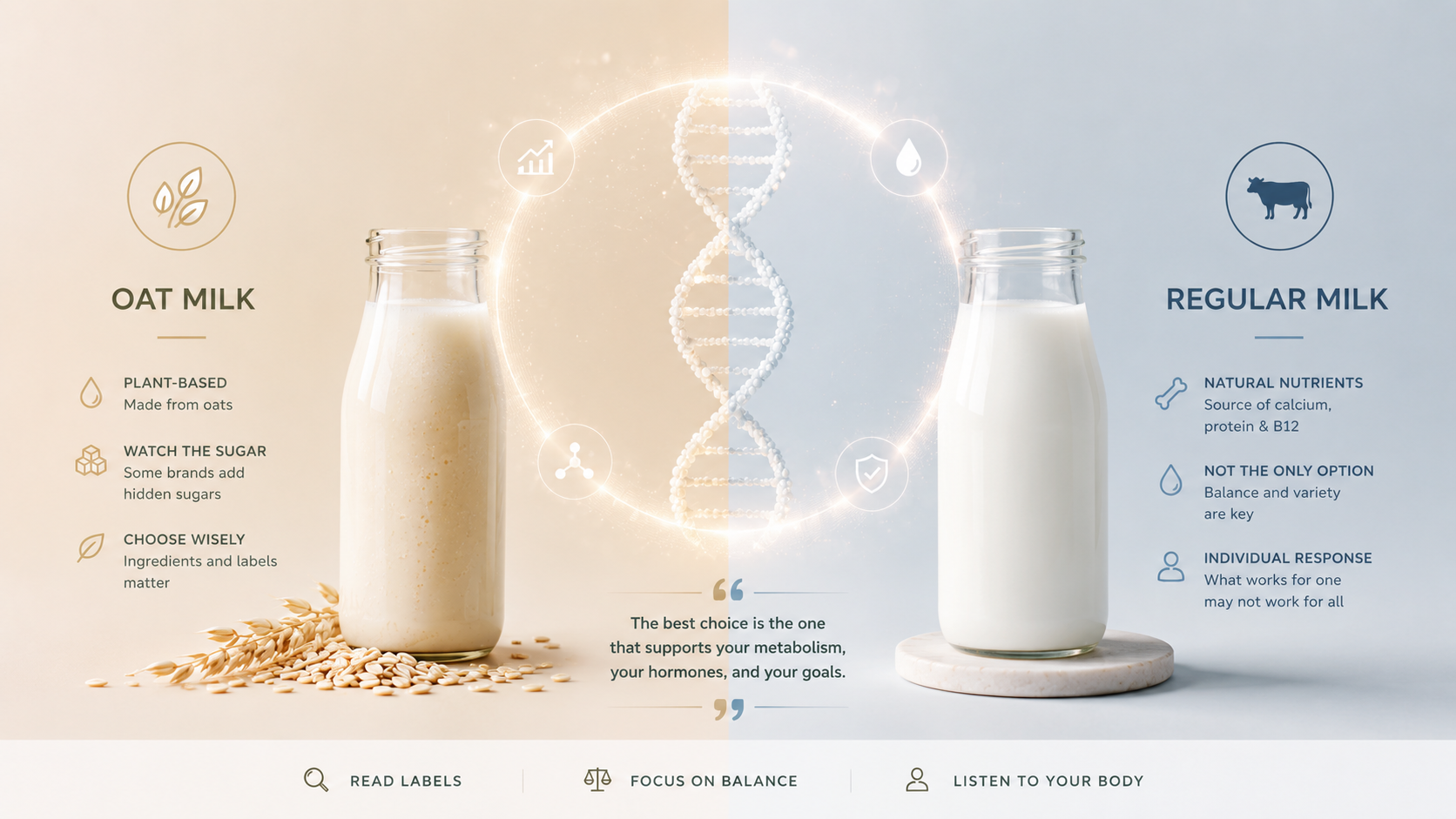
Walk through any grocery store and you'll find shelves filled with oat milk products promising a healthier alternative to dairy. Many people choose oat milk because it feels lighter, cleaner, and more aligned with modern wellness trends, but if your goal is improving metabolic health or losing weight, there is an important question worth asking:
Is oat milk actually helping, or could some versions be acting more like a hidden source of sugar?
The answer is more nuanced than most headlines suggest.
The Problem With Nutrition Marketing
For decades, the dairy industry emphasized the importance of milk for strong bones and calcium intake. While dairy products can certainly provide valuable nutrients, the marketing message often became simplified:
"Drink more milk because it's healthy."
At the same time, many flavored dairy products entered the market containing significant amounts of added sugar. Today, a similar pattern is emerging in the plant-based beverage industry. The message has shifted from:
"Milk is healthy." to"Plant-based milk is healthier."
But neither statement tells the whole story. A product being dairy-free does not automatically make it metabolically healthy, likewise, a dairy product is not automatically unhealthy. LET’S BREAK IT DOWN…
Not All Oat Milk Is Created Equal

Many consumers assume all oat milk products are similar, in reality, nutrition labels can vary dramatically.
Some oat milk products contain:
Added sugars
Syrups
Flavorings
Oils
Stabilizers
Others contain very few ingredients and little or no added sugar.
This distinction matters because your body responds to what is actually inside the carton—not what is written on the front label.
The healthiest choice is often the product with the shortest ingredient list and the least added sugar. #NuTip.
How Oat Milk Can Affect Blood Sugar
This is where many people get surprised.
Oats are naturally rich in carbohydrates. During the manufacturing process, enzymes are often used to break down oat starch into smaller sugar molecules. This helps create the naturally sweet taste that many oat milk products have—even when no table sugar is added. As a result, some oat milk products can contain more rapidly absorbed carbohydrates than people realize.
When you drink a beverage that contains mostly carbohydrates and very little protein or fat, blood sugar may rise more quickly compared to foods that digest more slowly.
For example:
A glass of sweetened oat milk may contain a significant amount of carbohydrates with very little protein.
A glass of low-fat milk naturally contains carbohydrates, but it also provides protein, which can help slow digestion and increase satiety.
This doesn't mean oat milk is unhealthy, it simply means that different beverages can affect blood sugar and hunger differently.
If your goal is weight loss or improving metabolic health, it's worth paying attention not only to calories, but also to how a food or drink affects your blood sugar and appetite.
The impact will depend on:
The specific product
Whether it contains added sugar
Serving size
What you consume alongside it
Your individual metabolic health
For someone with insulin resistance, frequent consumption of high-sugar beverages may make blood sugar management more difficult. For someone who is metabolically healthy and physically active, the effect may be much smaller.
Is oat milk good for weight loss?
Oat milk can fit into a weight-loss plan, but not all oat milk products are equal. Unsweetened varieties are generally a better choice than sweetened versions. The overall effect depends on total calorie intake, added sugar content, and individual metabolic health.
The Real Question Isn't Dairy vs Plant-Based
Nutrition debates often become:
"Dairy versus plant-based."
But this may be the wrong question. The better question is:
Which option supports your metabolism, appetite regulation, energy levels, and long-term health?
For some individuals, low-fat dairy products can fit perfectly into a healthy eating pattern, for others, reducing dairy may improve digestive comfort or help them better align with personal preferences. The goal is not choosing sides, the goal is choosing what works for your body.
Can Dairy Still Be Part of a Healthy Diet?
Despite what social media often suggests, dairy products are not inherently problematic. For many people, Plain yogurt, unsweetened Greek yogurt, milk and cottage cheese can provide protein, calcium, and other nutrients without negatively affecting health.
One cup of plain yogurt and one serving of milk are not automatically obstacles to weight loss or metabolic health.
Context matters.
Total dietary pattern matters.
And individual responses matter.
Is oat milk healthier than regular milk?
Neither option is automatically healthier. Unsweetened oat milk may be a good choice for some people, while milk provides protein and naturally occurring nutrients. The best option depends on individual goals, preferences, and metabolic health.
What About Dairy, Acne, and Hormones?

Many people report improvements in skin health after reducing dairy intake, others notice no difference at all. The scientific literature suggests that responses vary significantly between individuals, this is where personalized nutrition becomes important.
Rather than assuming a food is universally "good" or "bad," it can be more helpful to evaluate:
Overall diet quality
Blood sugar balance
Stress levels
Sleep quality
Hormonal health
Individual sensitivities
A reaction that occurs in one person may not occur in another.
Health is rarely about eliminating a single food. It is usually about restoring balance across the entire system. Metabolic Health Changes Everything
One of the most important ideas in modern nutrition is that two people can eat the same food and experience different outcomes. A food that works well for one person may not work as well for another. As discussed in The Metabolic Health Solution:
"The real transformation happens when nutrition becomes personalized to your biology rather than generalized for the population."
This perspective aligns closely with my approach to personalized nutrition. Instead of guessing, the goal is to understand the factors influencing your metabolism and make targeted adjustments.
Where Epigenetics Fits In
Emerging research in epigenetics suggests that lifestyle and environmental factors may influence how genes are expressed over time. Nutrition is one of those factors.
While no single food determines your health, dietary patterns can interact with biological pathways involved in metabolism, inflammation, and energy production. This is one reason personalized approaches are becoming increasingly valuable.
At Dietisha, epigenetic insights are used alongside nutrition and lifestyle assessment to help identify areas where personalized changes may support better long-term health outcomes. The goal is not perfection, the goal is clarity.
───────────────────
Bottom Line
Oat milk is not automatically a health food.
And dairy is not automatically a problem.
The real issue is often hidden sugar, highly processed ingredients, and choosing foods based on marketing rather than understanding how they affect your body.
If you're trying to lose weight or improve metabolic health:
✅ Read ingredient labels
✅ Choose unsweetened options when possible
✅ Prioritize overall dietary patterns
✅ Focus on metabolic health rather than food trends
✅ Build a nutrition strategy that works for your unique biology
Because sustainable health rarely comes from following the latest food trend. It comes from understanding what your body actually needs.
Continue Learning
Related Articles
→ Is Matcha Good for Weight Loss? What Science Actually Says
→ How Stress Affects Your Genes
→ How Lifestyle Changes Gene Expression
